Why Are Plants Replacing Conventional Positioners?
Conventional pneumatic and basic electro-pneumatic positioners remain widely used in industrial plants. They can provide reliable valve positioning, but their diagnostic capabilities are limited compared with modern intelligent positioners.
In applications where valve performance, equipment availability, and maintenance efficiency are important, upgrading to a smart digital positioner can offer practical advantages.
However, replacement is not always necessary. The decision should be based on actual operating problems and plant requirements.

4 Signs That an Upgrade May Be Worth Considering
1. Frequent Valve Calibration and Adjustment
If a control valve requires repeated manual calibration or troubleshooting, a smart positioner may help simplify commissioning and adjustment.
Many digital models support automatic calibration and electronic configuration, reducing the need for repeated mechanical adjustments.
2. Limited Visibility Into Valve Conditions
A conventional positioner generally provides limited information about the internal condition of the valve assembly.
Smart positioners can provide diagnostic data to help identify issues such as excessive friction, air leakage, abnormal valve response, and changes in operating performance. The available diagnostic functions vary by model and configuration.
3. Difficult Maintenance in Remote or Hazardous Areas
When control valves are installed in difficult-to-access locations, local manual inspection can increase maintenance time and exposure to hazardous environments.
Digital communication allows technicians to access selected instrument information through compatible asset management systems, depending on the positioner and plant infrastructure.
4. Increasing Requirements for Plant Digitalization
Modern process plants increasingly use equipment condition monitoring to support maintenance planning.
Smart positioners can provide valve status, diagnostic records, and performance trends, helping maintenance teams make more informed decisions rather than relying entirely on scheduled inspections.
Which Smart Positioners Can Be Considered?
Several established manufacturers offer intelligent valve positioners for industrial control applications:
-
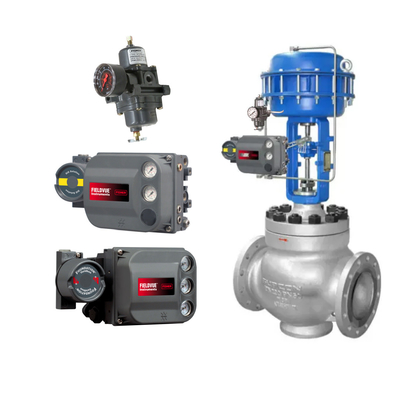
Fisher FIELDVUE DVC6200: Offers HART communication, linkage-less feedback, and valve performance diagnostics.
-
Rotork RTP-4400: Features non-contact magnetic feedback, pressure-sensor-based diagnostics, and dual hazardous-area certification.
-
SAMSON Type 3730 Series: Provides different communication and diagnostic configurations across the product family.
The correct selection depends on the existing actuator, mounting interface, signal requirements, communication infrastructure, and required diagnostic functions.
What Should Be Checked Before Replacement?
Before upgrading an existing pneumatic positioner, engineers should verify:
-
Linear or rotary actuator type and mounting dimensions.
-
Required input signal and communication protocol.
-
Supply air pressure and actuator air consumption.
-
Single-acting or double-acting operation.
-
Hazardous-area certification and environmental protection.
-
Compatibility with the existing control system.
A smart positioner does not automatically improve every control valve. Mechanical problems such as damaged trim, excessive packing friction, or an incorrectly sized actuator may still require separate correction.
Conclusion
Upgrading to a smart digital valve positioner makes the most sense when a plant needs better diagnostic visibility, easier commissioning, or improved maintenance planning.
For valves operating reliably with no requirement for advanced diagnostics, a conventional positioner may remain a cost-effective solution. The decision should be based on the valve's operating condition and the plant's long-term maintenance strategy.


 Το μήνυμά σας πρέπει να αποτελείται από 20-3.000 χαρακτήρες!